
First killings in Morocco since Gen Z protests erupted
```html Morocco: Deaths Reported as Protests Over World Cup Spending Escalate
At least two people have died in Morocco after police opened fire on protesters in Lqliaa, near Agadir, according to state media. The incident marks a significant escalation in the youth-led demonstrations that have swept the country, fuelled by anger over government spending on football stadiums for the 2030 FIFA World Cup at the perceived expense of essential public services.
Growing Discontent Fuels Nationwide Protests
The protests, largely organised by young Moroccans dubbed "GenZ 212" after the country’s international dialling code, began on Saturday. Demonstrators are voicing their frustration over high unemployment, inadequate healthcare, and a perceived lack of government responsiveness to their needs. A common slogan chanted during the protests is: "Stadiums are here, but where are the hospitals?"
One protester from Oujda, speaking to BBC Newsday anonymously for fear of reprisal, described the local hospital as being akin to a "jail," citing issues with cleanliness and alleged corruption requiring bribes for access to medical care.
Police Response and Government Reaction
According to the state-owned news agency, police in Lqliaa opened fire on Wednesday evening, claiming they acted "in legitimate self-defence" to repel an "attack" on a police station. The interior ministry had previously stated that the right to protest within the law would be upheld. However, the recent violence suggests a hardening of the government's stance.
Official statistics paint a grim picture of the economic challenges facing young Moroccans. The national unemployment rate stands at 12.8%, but youth unemployment is significantly higher at 35.8%. Among graduates, the unemployment rate is 19%, according to Reuters.
Protests Spread Across Major Cities
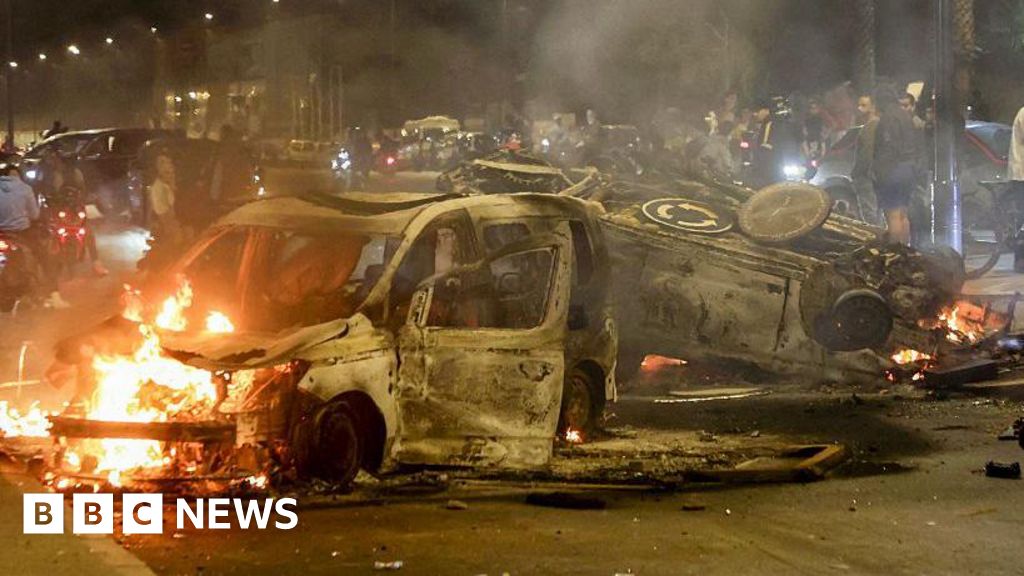
The protests have not been confined to Lqliaa. Major cities including Rabat, Casablanca, Tangier, and Marrakesh have also witnessed demonstrations. Local media reported that protesters in Marrakesh burned a police station. The interior ministry spokesman, Rachid El Khalfi, stated that 409 people have been detained across Morocco, with over 260 police officers and 20 protesters injured. He also reported that 40 police vehicles and 20 private cars had been set ablaze.
Context: Economic Disparities and Social Media Activism
The Moroccan protests reflect a broader trend of youth-led movements across Africa and Asia. Similar demonstrations have recently taken place in Nepal, Indonesia, the Philippines, and Madagascar, highlighting shared grievances related to economic inequality, corruption, and a perceived disconnect between governments and their populations. Social media plays a crucial role in organizing and amplifying these protests, often bypassing traditional media channels.
Analyst Viewpoint: The Underlying Issues
According to Dr. Fatima Akil, a political science professor at Mohammed V University in Rabat, the protests are a manifestation of long-standing socio-economic issues in Morocco. "While the World Cup bid has acted as a catalyst, the underlying problems of unemployment, inequality, and a lack of opportunities for young people have been simmering for years," Dr. Akil told BBC Africa. "The government needs to address these fundamental issues rather than simply focusing on security measures."
Historical Context: Echoes of the Arab Spring?
The current unrest evokes memories of the Arab Spring uprisings that swept across North Africa and the Middle East in 2011. While Morocco avoided the large-scale regime change seen in other countries, the protests prompted King Mohammed VI to introduce constitutional reforms aimed at increasing political participation and addressing some of the grievances of the population. However, critics argue that these reforms have not gone far enough in addressing the deep-seated issues facing Moroccan society.
Government Response and Future Outlook
Morocco's governing coalition issued a statement expressing willingness to engage in dialogue with the youth "within institutions and public spaces to find realistic solutions." It also praised what it called "the balanced reaction of security authorities in line with relevant legal procedures." However, the deaths in Lqliaa are likely to further inflame tensions and raise questions about the government's commitment to peaceful dialogue.
The future of the protests remains uncertain. While the GenZ 212 movement lacks a formal leadership structure, its ability to mobilize large numbers of young people through social media suggests that the protests could continue to pose a significant challenge to the Moroccan government.
Expert Perspective: The Role of Social Media
"Social media has become the primary tool for young Moroccans to express their discontent and organize collective action," says Ahmed Benani, a digital rights activist based in Casablanca. "However, it also presents challenges, as the lack of a centralized leadership structure can make it difficult to engage in meaningful negotiations with the government. Furthermore, the government's ability to monitor and potentially disrupt online communication is a growing concern." ```
Originally sourced from: BBC News Africa