
Behind the Gen Z protests that forced Madagascar's president to sack his government
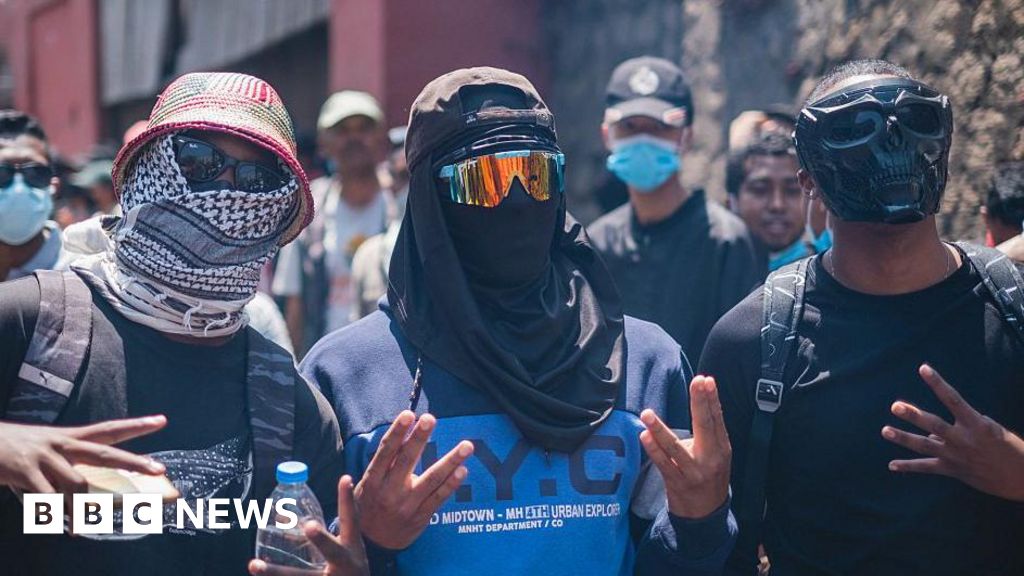
```html Madagascar Government Sacked Amid Deadly Protests Over Living Conditions
Madagascar's President Andry Rajoelina has sacked his government in response to widespread protests over rising living costs and persistent shortages of basic necessities. The protests, which have gripped the Indian Ocean island nation for over a week, represent the most significant challenge to Rajoelina's leadership since he assumed office in 2018. At least 22 people have reportedly been killed in the unrest, according to the UN, although the Malagasy government disputes this figure.
The demonstrations, initially sparked by anger over chronic power and water outages, have evolved into broader demands for political change, including calls for President Rajoelina's resignation. The sacking of the government has so far failed to quell the unrest, with protesters continuing to take to the streets in several cities.
Protests Erupt Over Basic Needs, Expand to Political Demands
The immediate trigger for the protests was the arrest of two city politicians in Antananarivo on September 19th. They were planning a peaceful demonstration against the frequent and prolonged power and water cuts caused by the state-owned utility company, Jirama. Many perceived their detention as an attempt to stifle dissent, fueling public outrage and leading to the formation of a youth-led online movement known as Gen Z Mada.
The protests have since spread beyond the capital, encompassing at least eight cities across the island. Demonstrators are denouncing the blackouts, accusing the government of failing to guarantee basic rights, and alleging widespread corruption within Jirama as a key factor contributing to the electricity crisis.
Gen Z Mada Leads the Charge, Gains Broader Support
Gen Z Mada initially coordinated the protests through social media platforms like Facebook and TikTok. The movement has since gained the support of various labor unions, including the Malagasy Trade Union Solidarity, and civil society organizations. These organizations are calling for church-led talks to prevent further escalation and potential civil conflict.
Opposition leaders Siteny Randrianasoloniaiko and former President Marc Ravalomanana have also voiced their support for the protests, issuing a joint statement criticizing the government's handling of the situation. They have both rejected offers to join Rajoelina's government, labeling such a move a "betrayal" of the Malagasy people.
Government Response and Future Outlook
Security forces have been deployed in force in Antananarivo and other major cities, using tear gas and water cannon to disperse protesters. A dusk-to-dawn curfew was imposed in the capital following reports of violence and looting, including the torching of the finance ministry's offices.
While President Rajoelina has accused some of his ministers of incompetence and promised World Bank funding to address the power outages, his actions have not appeased the protesters. Schools across the capital and nearby districts were closed last week amid fears of escalating violence.
Expert Analysis: A Tipping Point for Madagascar?
Political scientist Dr. Sahondra Rabenarivo, a lecturer at the University of Antananarivo, believes the current crisis represents a critical juncture for Madagascar. "The protests are not simply about electricity or water; they are a manifestation of deep-seated frustration with the government's perceived failure to address widespread poverty, corruption, and inequality," she told BBC News Africa. "The government's response will be crucial in determining whether this situation spirals out of control."
Dr. Rabenarivo added that the government's reliance on force to suppress dissent could backfire, potentially leading to further radicalization and instability. "A more constructive approach would involve genuine dialogue with protesters, addressing their grievances, and holding those responsible for corruption accountable."
Historical Context: A Nation Prone to Uprisings
Madagascar has a history of political instability and popular uprisings. Since gaining independence from France in 1960, the country has experienced several periods of turmoil, including the mass protests in 2009 that forced then-President Ravalomanana to resign and paved the way for Rajoelina's first term in office. Rajoelina was re-elected in 2018 and again in 2023, although the opposition boycotted the latter election, alleging widespread irregularities.
The current protests underscore the persistent challenges facing Madagascar, one of the world's poorest countries, where an estimated 75% of the population lives below the poverty line. Access to basic services like electricity remains limited, exacerbating social and economic inequalities and fueling public discontent.
The Military's Role: A Key Factor
Governance experts suggest that a critical factor in determining the outcome of the current crisis will be the stance of the military. Whether the military continues to obey orders to crack down on protesters or chooses to remain neutral could prove decisive. A presidential spokesperson has publicly stated that the government does not want a coup d'état, highlighting the perceived risk of military intervention.
The situation in Madagascar remains volatile, with no clear resolution in sight. The coming days and weeks will be crucial in determining whether the country can navigate this crisis and address the underlying issues that have fueled the protests. ```
Originally sourced from: BBC News Africa