
Harry Hill says his stepfather's death made him pursue comedy career
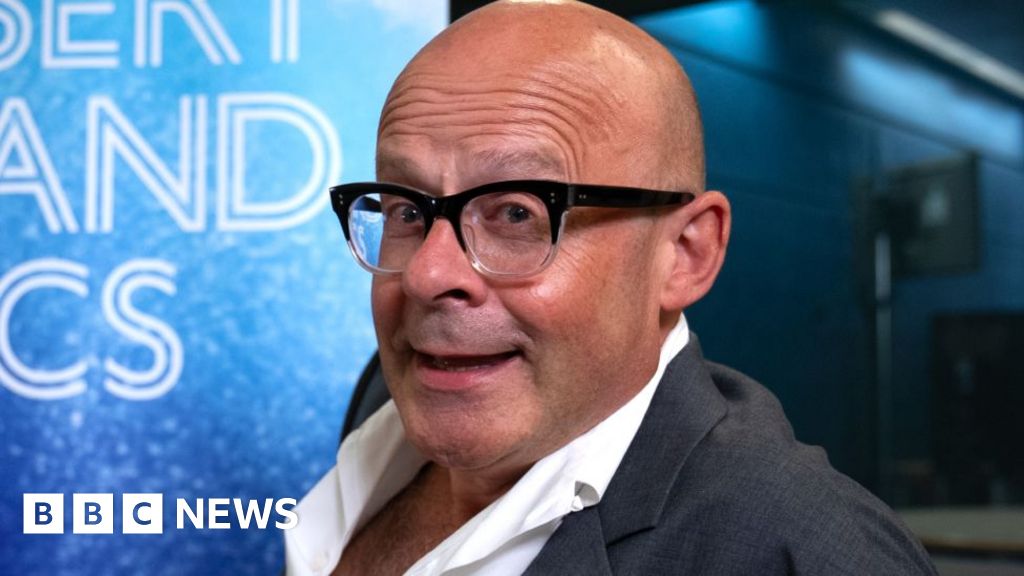
Harry Hill: From Scalpel to Stand-Up, a Career Forged in Loss
Comedian Harry Hill, best known for his surreal humour and the long-running ITV show Harry Hill's TV Burp, has revealed that the death of his stepfather was a pivotal moment that propelled him from a career in medicine to the world of entertainment. Speaking on BBC Radio 4's Desert Island Discs, Hill recounted how his stepfather's passing at a relatively young age prompted a re-evaluation of his own life and career aspirations.
A Doctor's Disillusionment
Hill, 60, qualified as a doctor in 1988 after studying at St George's Medical School. He began his medical career in orthopaedics, but quickly realised the profession wasn't a good fit. He described feeling "completely out of my depth" when having to deliver tragic news to patients and struggling with the emotional demands of the job. "I think it's difficult even if your heart's in it," he told Lauren Laverne, host of Desert Island Discs.
His stepfather's death, however, served as a catalyst. "It had been a long time coming, and then my stepfather died of cancer," Hill explained. "And I thought, here's a man who's worked all his life...And I thought, I don't want that to be me." The realisation that life was too short to be spent in a career he didn't love, combined with a sense of liberation from potential disapproval, spurred him to pursue comedy.
The Allure of the Stage
Hill's journey from medicine to comedy mirrors a broader trend of individuals seeking more fulfilling and creative careers, particularly in the arts. Dr. Oliver Double, a comedy historian at the University of Kent, notes that "the appeal of comedy and performance often lies in the perceived autonomy and creative freedom it offers, a stark contrast to the often rigid structures of traditional professions. Hill's story highlights the growing societal emphasis on pursuing passion and purpose over purely financial security."
TV Burp and Beyond: Comedy Success
After leaving medicine, Hill embarked on a comedy career that saw him become a household name. He achieved widespread recognition with Harry Hill's TV Burp, a fast-paced, satirical dissection of the week's television, which aired on ITV for 11 series. The show's success cemented Hill's status as one of Britain's leading comedians, known for his absurdist humour, visual gags, and distinctive style.
While TV Burp brought him fame, Hill admitted to Laverne that he doesn't miss the intense pressure of writing new episodes every week. "I would start the week with no show, knowing that on Saturday morning I'd have to sit down and write a show," he said, describing the demanding workload and the constant need to watch hours of television. He has since presented other TV programmes and co-wrote the X Factor musical I Can't Sing, which, despite its initial hype, was a critical and commercial failure.
A Changing Landscape of Entertainment
The closure of I Can't Sing after just six weeks at the London Palladium highlights the increasingly competitive and unpredictable nature of the entertainment industry. Professor Sharon Friedlander, a cultural studies expert at City, University of London, observes that "while talent and creativity remain crucial, success in today's entertainment landscape also requires a deep understanding of audience preferences and the ability to adapt to rapidly changing trends. The failure of I Can't Sing underscores the importance of aligning creative vision with market demand."
A Life Lesson Learned
Despite the occasional setback, Hill remains a prominent figure in British comedy. His story serves as an inspiring reminder that it's never too late to pursue a different path, even if it means leaving behind a seemingly secure career. Reflecting on his decision to leave medicine, Hill said, "I remember driving away, weight lifted, and I thought, wow, this is really exciting, and it was, and terrifying in equal measure."
Hill's appearance on Desert Island Discs provided a rare glimpse into the personal motivations behind his career choices, revealing the profound impact of his stepfather's death and his own search for a more fulfilling life beyond the confines of a medical career. His journey from doctor to comedian is a testament to the power of following one's passions, even in the face of uncertainty.
Originally sourced from: BBC Entertainment