
We need hospitals more than football stadiums, say Morocco's young protesters
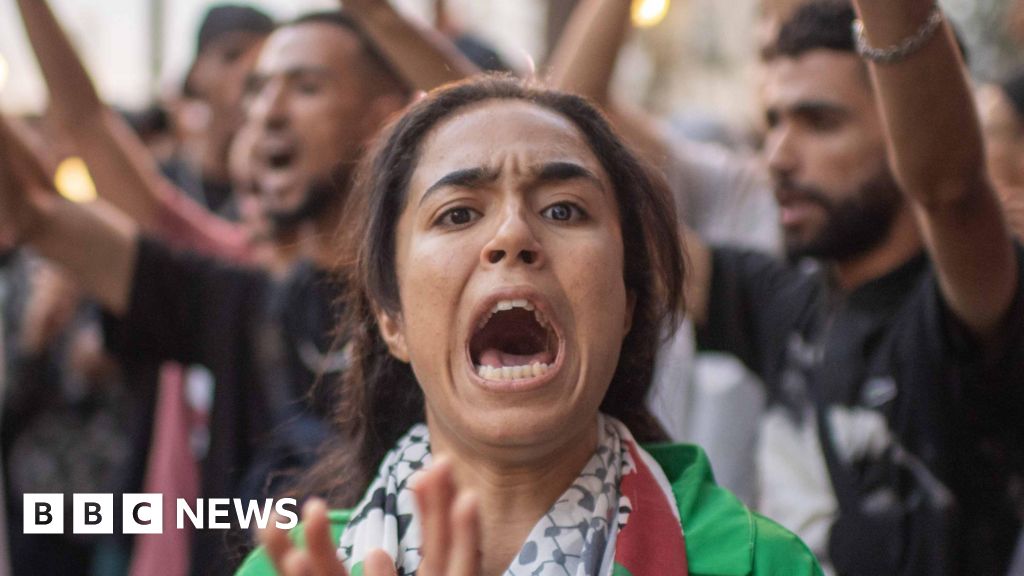
Moroccan Youth Demand Hospitals, Not Football Stadiums, Amid World Cup Preparations
Thousands of young Moroccans are taking to the streets across the country, voicing their discontent over what they perceive as misplaced priorities by the government. The protests, coordinated largely through social media, highlight deep-seated frustrations regarding healthcare, education, and economic opportunities, even as Morocco prepares to co-host the 2030 FIFA World Cup.
Gen Z-Led Protests Gain Momentum
Inspired by similar youth-led movements elsewhere, the "Gen Z 212" protests – the number referencing Morocco's international dialing code – began last week and have steadily grown, fueled by anger over socio-economic issues. Demonstrators are chanting slogans like "No World Cup, health comes first" and "We want hospitals not football stadiums," reflecting their demand for improved public services.
The protests coincide with Morocco's ambitious preparations to co-host the 2030 World Cup, a project that includes the construction of what is touted to be the world's largest football stadium, with a capacity of 115,000. The total investment in football infrastructure is reportedly around $5 billion (£3.7 billion), a figure that has become a focal point for the protesters' grievances.
Underlying Grievances: Healthcare Crisis Fuels Outrage
While the World Cup preparations have become a symbol of the perceived misallocation of resources, the immediate trigger for the protests was the recent death of eight women in a maternity ward of a hospital in Agadir. Reports suggest that these deaths could have been prevented with better care, adequate equipment, and sufficient medical staff, underscoring the dire state of the country's healthcare system. According to World Health Organization (WHO) data, Morocco has significantly fewer doctors per capita than the recommended level. Data from 2023 suggests there were 7.8 doctors per 10,000 Moroccans, far below the WHO's recommendation of 23 per 10,000.
Demands for Systemic Change
Beyond healthcare, the protesters are demanding a comprehensive overhaul of the country's social and economic policies. Their demands, widely circulated on social media, include:
Free and quality education for all Accessible public healthcare for everyone Decent and affordable housing Better public transport Lower prices and subsidized basic goods Improved wages and pensions Job opportunities for youth and reduced unemployment Adoption of English as a second language (after Arabic) instead of French
Government Response and Allegations of Repression
The Moroccan government, led by Prime Minister Aziz Akhannouch, has stated its willingness to engage in dialogue. However, the protests have been met with a heavy police presence, resulting in mass arrests and, in some instances, violent clashes. Reports indicate that hundreds have been detained, and both protesters and police officers have sustained injuries. There have been conflicting reports regarding fatalities. While initial reports claimed three deaths, authorities later released CCTV footage to disprove claims of police violence, stating that security forces opened fire after protesters attempted to storm a police station.
"A Dignified Life": Voices from the Protests
"This government has been abusing their power too much," said Hakim (not his real name), a 23-year-old protester from Casablanca. "What am I gaining from a country that is not providing healthcare for my ageing parents or educating me? We deserve a dignified life. We want to host the FIFA World Cup, but we want to do that with our heads up high, not while hiding behind a façade."
Analysis: Echoes of the Past, Challenges for the Future
According to Dr. Fatima Sadiqi, a Moroccan sociologist specializing in youth movements, the current protests reflect a growing disconnect between the aspirations of young Moroccans and the realities of their socio-economic conditions. "These young people are digitally connected, globally aware, and increasingly frustrated with the lack of opportunities and the perceived corruption within the system," she explains. "The focus on the World Cup, while potentially beneficial for the country's image, has become a lightning rod for these deeper frustrations."
She further notes that the leaderless and decentralized nature of the "Gen Z 212" movement presents a unique challenge for the government. "Unlike previous protest movements, this one is not tied to any political party or established organization, making it difficult to engage in traditional forms of negotiation."
However, some analysts caution that the lack of formal leadership could also make the movement more susceptible to internal divisions and external manipulation. "While the protesters' demands are legitimate, it remains to be seen whether they can maintain unity and sustain their momentum in the face of government pressure," says Ahmed Benchemsi, a Moroccan journalist and political commentator.
Looking Ahead
As Morocco continues its preparations for the 2030 World Cup, the ongoing protests serve as a stark reminder of the urgent need to address the underlying socio-economic challenges facing the country's youth. The government's response to these demands will be crucial in shaping the future of Morocco and ensuring that the benefits of hosting a global event like the World Cup are shared by all its citizens.
Originally sourced from: BBC News Africa