
Behind the Gen Z protesters who want to force Madagascar's president from power
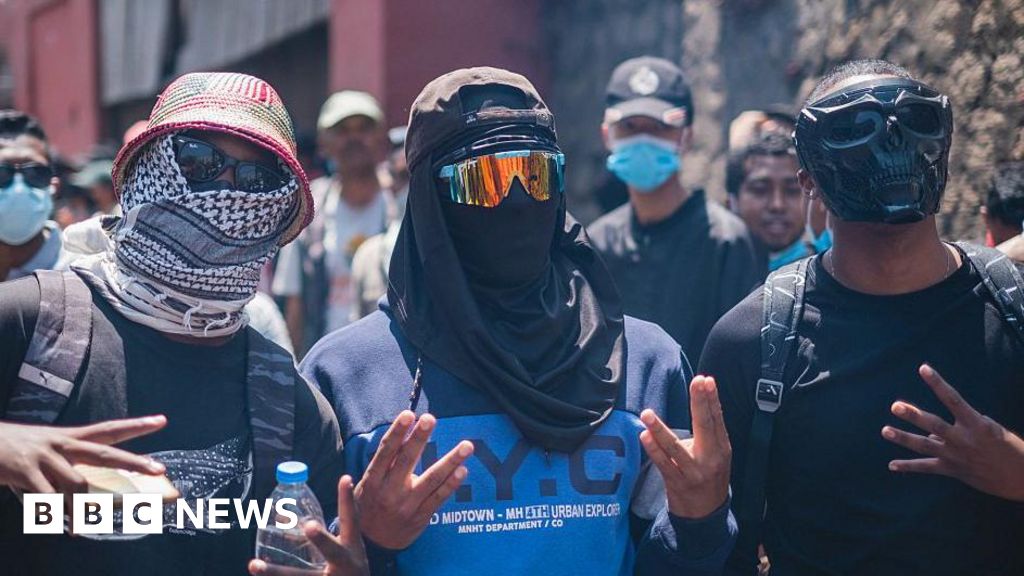
```html Madagascar Protests: Anger Over Blackouts Fuels Calls for President's Resignation
Thousands of Malagasy citizens have taken to the streets across Madagascar in recent weeks, staging the largest wave of protests the island nation has seen in over 15 years. Triggered by frustrations over persistent shortages of basic necessities like water and electricity, the demonstrations have rapidly evolved into a significant challenge to President Andry Rajoelina, who has led the country since 2018.
While President Rajoelina initially responded by sacking his government, the move failed to appease protesters, who are now demanding his resignation. The United Nations has reported at least 22 deaths and over 100 injuries linked to the unrest, figures the Malagasy government disputes as "rumours and misinformation."
From Blackouts to Broader Grievances
The protests initially erupted following the arrest of two prominent city politicians in Antananarivo on September 19th. The politicians were planning a peaceful demonstration against chronic power and water outages plaguing the capital. These outages, often lasting for hours each day, are blamed on the state-owned utility company, Jirama. Many viewed the arrests as an attempt to suppress legitimate dissent, sparking widespread public anger. This anger was quickly amplified by civil society groups and a burgeoning youth-led online movement known as Gen Z Mada.
The demonstrations have since spread beyond Antananarivo, encompassing eight other cities across the island. Protesters are waving banners, denouncing the blackouts, and accusing the government of failing to guarantee basic rights. Activists further allege that widespread corruption within Jirama is a major contributing factor to the electricity crisis.
Who is Behind the Protests?
Gen Z Mada initially coordinated the protests through social media platforms such as Facebook and TikTok. Following a meeting with civil society groups and local politicians, a committee was formed to organize further demonstrations. Subsequently, various groups have joined the movement. Several labor unions, including the Malagasy Trade Union Solidarity, the country's largest, have publicly endorsed the youth-led movement.
Civil society organizations have appealed for church-led talks to "prevent Madagascar from sinking into chaos or civil war." Opposition leader Siteny Randrianasoloniaiko and former President Marc Ravalomanana issued a rare joint statement expressing their support for the protests. Both have declined offers to join Rajoelina's government, deeming such a move a "betrayal" of the Malagasy people.
Demands for Political Change
While the protesters haven't issued a formal manifesto, their initial anger over public service failures has broadened into demands for comprehensive political change. Many young people, facing precarious employment and low wages, are directly calling for President Rajoelina's resignation, holding him responsible for their hardships. Demonstrators in the capital have been seen carrying flags and banners with slogans like "Rajoelina out."
A spokesperson for Gen Z Mada told AFP news agency that they want the president to step down and "the cleaning up of the National Assembly." They also demand that Rajoelina be held accountable for the deaths allegedly caused by security forces. Furthermore, some social media users are advocating for the dissolution of the election commission and the country's highest court.
Government Response and Allegations of Foreign Interference
Security forces have maintained a strong presence in Antananarivo and other major cities, employing tear gas and water cannon to disperse protesters. A dusk-to-dawn curfew was imposed in the capital following reports of violence and looting, including the arson of the finance ministry's offices.
President Rajoelina initially attempted to appease the protesters by dismissing his government, calling for dialogue with young people, and promising World Bank funding to address the power outages. However, when these measures failed to quell the demonstrations, his rhetoric shifted. In a Facebook livestream, Rajoelina alleged that the protesters were being "exploited to provoke a coup" and that foreign forces were financing the movement to oust him. Schools across the capital and nearby districts were closed last week due to concerns about escalating violence. Authorities maintain that unauthorized gatherings pose a threat to public order.
A Country Grappling with Poverty
Madagascar remains one of the world's poorest nations, with approximately 75% of the population living below the poverty line, according to the World Bank. The International Monetary Fund estimates that only about one-third of Madagascar's 30 million people have access to electricity.
One demonstrator told AFP that "living conditions of the Malagasy people are deteriorating and getting worse every day."
Analyst View: A Potential Tipping Point?
Political scientist Dr. Anja Ralaimanisa, a specialist in Malagasy governance at the University of Antananarivo, notes that the current protests reflect a deeper crisis of legitimacy. "The government's response so far has been largely reactive, and the allegations of foreign interference, while common in these situations, risk further alienating the population," she says. "The key question is whether the military will remain loyal to the government. Historically, the military's stance has been a crucial factor in determining the outcome of political crises in Madagascar."
Ketakandriana Rafitoson, a human rights activist, told AFP that the demonstrations risk dragging on and intensifying if authorities rely on force to suppress dissent instead of prioritising accountability. She warned that the "outcome risks political fragmentation, stronger nationalist rhetoric against perceived external interference, and possible economic fallout."
Madagascar has experienced several uprisings since gaining independence in 1960, including mass protests in 2009 that led to the ousting of then-President Ravalomanana and Rajoelina's initial rise to power. Rajoelina was re-elected in 2018 and again in 2023 in contested elections boycotted by the opposition. The current unrest presents a significant test to his leadership and the stability of the nation. ```
Originally sourced from: BBC News Africa