
Watchdog blames 'disproportionate force' by Kenya police for protest deaths
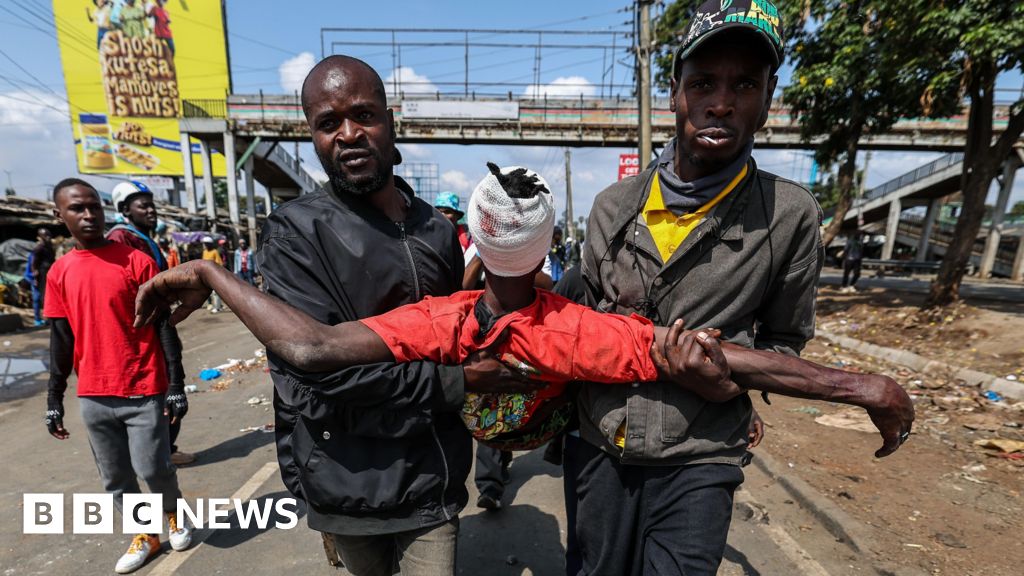
Kenya Police Accused of "Disproportionate Force" in Protest Crackdown
Kenya's police watchdog, the Independent Policing Oversight Authority (IPOA), has released a damning report accusing police officers of using "disproportionate force" during recent protests, which resulted in the deaths of at least 65 people. The report, published on Thursday, links the majority of fatalities to police actions, raising serious questions about accountability and the right to protest in the East African nation.
The protests, triggered by rising cost of living, proposed tax hikes, and allegations of police brutality, have rocked Kenya over the past six weeks. IPOA's investigation covers four separate days of demonstrations, documenting a total of 342 civilian injuries and 171 police injuries, as well as instances of looting and vandalism.
IPOA Report Highlights "Breaches of Constitutional Policing Standards"
The IPOA report details "significant breaches of constitutional policing standards, including use of disproportionate force, lack of professionalism, and failure to uphold public safety and rights." The watchdog also acknowledged the presence of "goons" who infiltrated the protests, "undermining the principles of peaceful assembly." However, the report's primary focus remains on the alleged excessive force employed by law enforcement.
The most significant loss of life occurred on July 7th, with 41 deaths reported. The report also examined earlier protests, including one on June 17th where street vendor Boniface Kariuki was shot at point-blank range and later died. An officer has been charged in connection with Kariuki's death. The initial protest on June 12th, sparked by the death in custody of teacher and blogger Albert Ojwang, was deemed "largely peaceful" by IPOA. Three police officers have since been charged with Ojwang's murder.
Government Response and Divergent Views
While a police spokesperson declined to comment directly on the IPOA report, referring to an earlier Interior Ministry statement, the government's response has been to condemn the violence as the work of "criminals," "looters," and "anarchists." In the wake of the July 7th demonstrations, President William Ruto instructed police to shoot protesters targeting businesses in the legs, a directive criticized by human rights organizations.
Interior Minister Kipchumba Murkomen previously described the protests as "terrorism disguised as dissent" and an "unconstitutional attempt" to change the government, denying allegations of excessive force by the police. This stance reflects a growing tension between the government's need to maintain order and the constitutional right to peaceful assembly.
Expert Analysis: Balancing Security and Rights
Dr. Mutahi Ngunyi, a Kenyan political analyst, argues that the government faces a difficult balancing act. "On one hand, the government has a duty to protect citizens and property from violence and looting. On the other hand, the right to protest is enshrined in the constitution," he explains. "The challenge lies in finding a proportionate response that respects fundamental rights while maintaining order. The IPOA report suggests that this balance has not been achieved."
Human rights lawyer, Alice Mogwe, director of DITSHWANELO (The Botswana Centre for Human Rights), emphasizes the importance of independent oversight. "IPOA's role is crucial in ensuring accountability for police actions. The report's findings should be taken seriously and lead to concrete steps to prevent future abuses," she states. "This includes thorough investigations, prosecutions of officers responsible for excessive force, and reforms to policing practices to ensure respect for human rights."
Historical Context: Policing and Protests in Kenya
The issue of police brutality and the right to protest is deeply rooted in Kenya's history. During the colonial era and the subsequent period of one-party rule, the police were often used to suppress dissent and maintain political control. While Kenya has made progress in strengthening democratic institutions and promoting human rights, concerns about police conduct persist. Past incidents of police violence during protests have often gone unpunished, fostering a climate of impunity. The IPOA was established in 2011 to provide independent oversight of the police and address this historical legacy.
The Way Forward
The IPOA report presents a crucial opportunity for Kenya to address systemic issues within its police force and reaffirm its commitment to protecting the right to peaceful assembly. Meaningful reforms, including improved training, stricter accountability mechanisms, and a change in the culture of policing, are essential to prevent future tragedies and build trust between law enforcement and the communities they serve.
Independent investigations into all deaths and injuries during the protests. Prosecution of police officers found to have used excessive force. Review and reform of police training and operational procedures. Strengthening IPOA's capacity to investigate and prosecute police misconduct. Open dialogue between the government, civil society, and the public on policing and human rights.
The international community will be watching closely to see how Kenya responds to the IPOA report and whether it takes meaningful steps to ensure accountability and protect the rights of its citizens.
Originally sourced from: BBC News Africa