
Former head of Central African football body jailed for war crimes
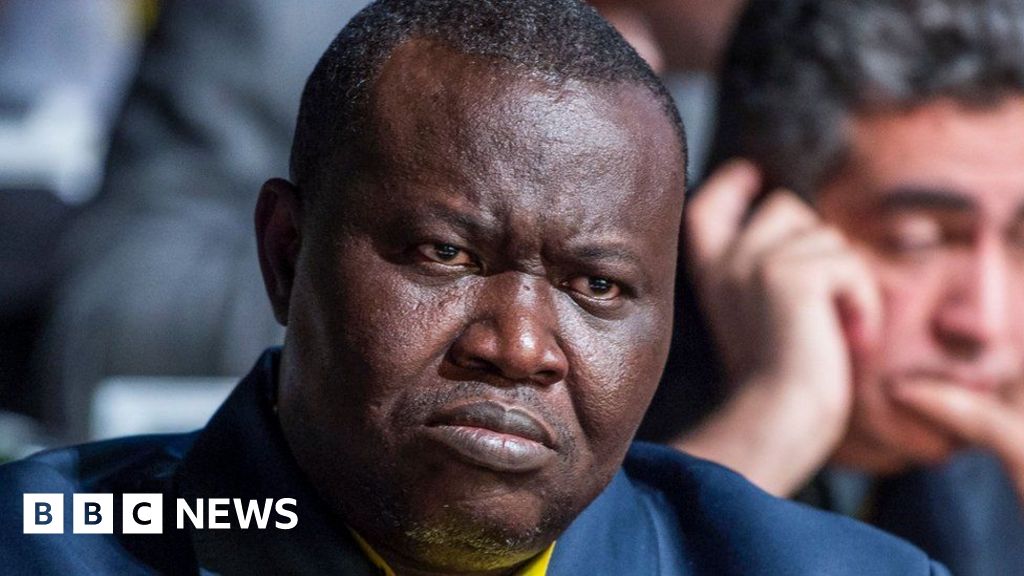
Former Central African Republic Football Chief Jailed for War Crimes by ICC
Patrice-Edouard Ngaïssona, the former head of the Central African Republic's (CAR) football federation, has been sentenced to 12 years in prison by the International Criminal Court (ICC) after being found guilty of war crimes and crimes against humanity. The charges relate to his role in coordinating attacks against the Muslim population in CAR during the violent conflict of 2013-2014.
Ngaïssona stood trial alongside Alfred Yekatom, a former militia leader nicknamed "Rambo," who was also convicted on 20 counts and sentenced to 15 years. The ICC judges delivered their verdict after a lengthy trial spanning nearly four years, which involved testimony from over 170 witnesses and the review of nearly 20,000 pieces of evidence.
Crimes Against Humanity and War Crimes Convictions
Both Ngaïssona and Yekatom were convicted of multiple crimes, including murder, torture, and persecution based on religion. While Ngaïssona was acquitted of rape, Yekatom was cleared of the charge of enlisting child soldiers. Both men consistently denied all accusations throughout the trial.
The prosecution argued that Ngaïssona provided financial support and instructions to the anti-Balaka militias during the peak of the conflict. Yekatom, as a commander, allegedly led fighters into the capital, Bangui, on December 5, 2013, resulting in the massacre of civilians. Prosecutors further alleged that the pair strategically targeted Muslims, branding them as "enemies of the nation." Yekatom was accused of authorizing his fighters to commit gruesome acts against Muslim civilians, including slitting throats and burying people alive.
Context: A Decade of Turmoil in CAR
The Central African Republic has been plagued by instability and violence for much of the past decade. The crisis escalated in 2013 when the predominantly Muslim Séléka rebels seized power in the majority-Christian nation, ousting then-President François Bozizé. This sparked the rise of the anti-Balaka militias, composed primarily of Christians, who aimed to counter the Séléka's influence.
The conflict resulted in widespread human rights abuses and displacement of the population. According to media reports from the time, at least 1,000 people were killed in Bangui alone in December 2013, and half of the city's population was forced to flee their homes during that month.
Who is Patrice-Edouard Ngaïssona?
Ngaïssona held significant influence as the self-proclaimed political coordinator of the anti-Balaka forces. His alleged involvement in the atrocities led to his disqualification from running for president in 2015.
Prior to his involvement in the conflict, Ngaïssona had a prominent career in sports administration. He served as the head of the CAR's football federation and briefly held the position of sports minister. In February 2018, he was elected to the executive committee of the Confederation of African Football (CAF), a move that drew criticism from human rights organizations.
Following his arrest by French authorities in December 2018, Ngaïssona was transferred to the ICC in January 2019.
Who is Alfred Yekatom?
Despite facing UN sanctions, Alfred Yekatom was elected as a Member of Parliament in 2016. He was arrested in October 2018 after firing a gun inside parliament following a dispute with another MP. His subsequent extradition to the ICC marked the first instance of such cooperation from the Central African Republic.
Expert Analysis: The Significance of the Verdict
According to Elise Keppler, Associate Director at Human Rights Watch, the convictions of Ngaïssona and Yekatom send a crucial message about accountability for atrocities committed in the Central African Republic. "This verdict underscores that those who command forces responsible for widespread atrocities can be held to account, even years later," she stated. "It’s a significant step towards justice for victims and a deterrent against future violence."
Dr. Phil Clark, a Professor of International Politics specialising in transitional justice in Africa at SOAS University of London, notes that while these convictions are important, they represent only a small fraction of the justice needed in CAR. "The ICC’s focus on a few high-profile cases, while necessary, can overshadow the need for broader, community-level reconciliation and justice mechanisms within the CAR itself," he explains. "Ultimately, sustainable peace requires a multi-faceted approach that addresses the root causes of the conflict and empowers local communities to rebuild trust."
The convictions come at a time when the Central African Republic is attempting to stabilize following years of conflict. A recent peace deal led to the dissolution of two rebel groups this month, offering a glimmer of hope for the future. However, the legacy of violence and impunity continues to pose a significant challenge to lasting peace and stability in the country.
Originally sourced from: BBC News Africa