
Tension rises as Atiku reacts to Okpebholo’s threats against Peter Obi
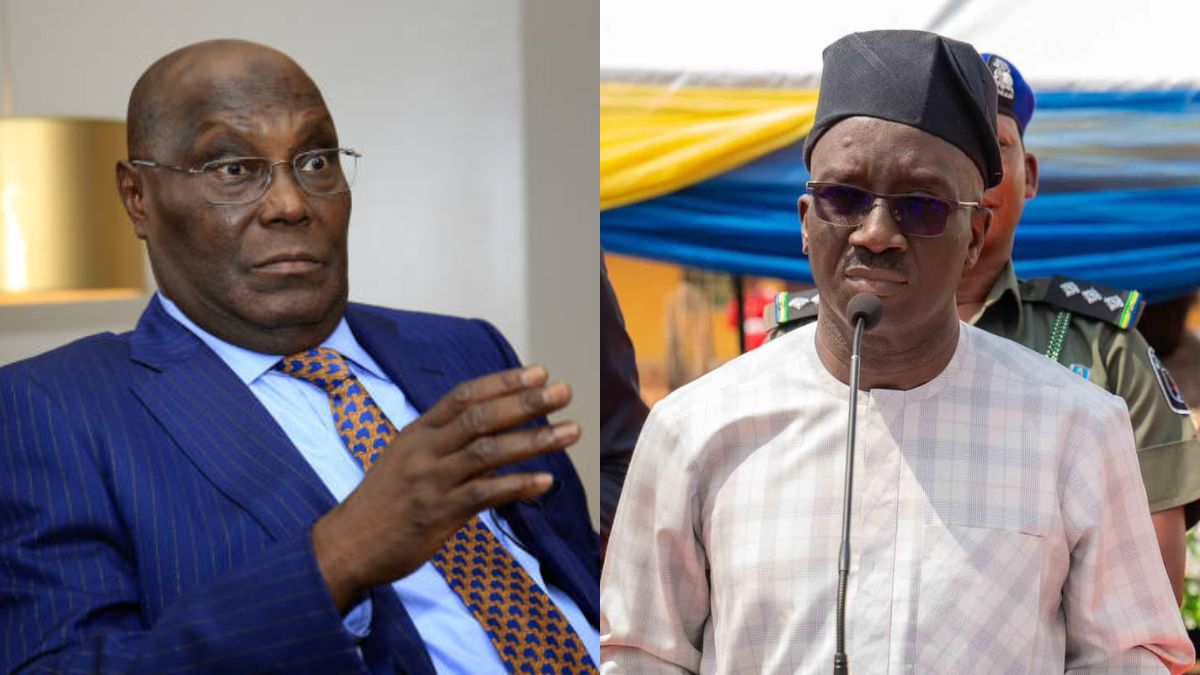
```html Atiku Condemns Okpebholo's Threat Against Peter Obi, Raising Concerns Over Political Safety
Former Vice President Atiku Abubakar has strongly denounced threats made by Edo State Governor Monday Okpebholo against Labour Party presidential candidate Peter Obi. Atiku's condemnation highlights escalating tensions and concerns about the safety of political figures in the lead-up to the 2027 general elections.
The controversy stems from a viral video where Governor Okpebholo, addressing supporters at an All Progressives Congress (APC) event, seemingly warned Obi against entering Edo State without his express permission. The governor's remarks, including statements suggesting Obi's safety could not be guaranteed, have been widely interpreted as a direct threat.
Atiku's Response and National Outcry
Atiku Abubakar, in a statement released on Tuesday, July 22, 2025, asserted that "a threat against Peter Obi or any of us is a threat against ALL of us!" He emphasized the importance of political tolerance and condemned any form of intimidation. "We may belong to different political parties, but we are all Nigerians. We must condemn political intimidation in all forms," Atiku stated.
The incident has ignited a nationwide debate regarding the limits of political discourse and the security of opposition figures. Social media platforms have become battlegrounds for supporters of both leaders, with expressions of outrage, concern, and partisan support dominating online discussions.
Civil Society Calls for Investigation
While Peter Obi has yet to issue a public response, civil society organizations have urged security agencies to investigate Governor Okpebholo's statements. These organizations emphasize the need to ensure the safety and security of all political actors, regardless of party affiliation. "It is crucial that law enforcement agencies take these threats seriously and conduct a thorough investigation," stated a representative from the Coalition for Good Governance.
Expert Analysis: The Broader Context of Political Intimidation
Dr. Aisha Bello, a political analyst at the Centre for Democracy and Development, notes that this incident is symptomatic of a broader trend of political intolerance in Nigeria. "Historically, Nigerian politics has been marred by instances of intimidation and violence, particularly during election periods," Dr. Bello explains. "The rhetoric employed by political actors can often incite unrest and create a climate of fear, which ultimately undermines the democratic process."
Dr. Bello further argues that the lack of strong condemnation from within Governor Okpebholo's own party, the APC, sends a worrying signal. "It is imperative that political parties hold their members accountable for their words and actions, especially when those actions threaten the safety and security of others," she added.
Historical Parallels and the Road Ahead
This incident evokes memories of past instances of political violence and intimidation in Nigeria. The 2003 and 2007 general elections, for example, were marred by widespread reports of voter suppression and violence against opposition supporters. While efforts have been made to improve the electoral process, incidents like this underscore the persistent challenges facing Nigerian democracy.
The spotlight is now on Governor Okpebholo. Whether he retracts his comments or faces further repercussions remains to be seen. The incident serves as a crucial test of Nigeria's commitment to political tolerance and the rule of law, particularly as the country gears up for the 2027 elections.
The Stakes for 2027
The 2027 elections are expected to be highly contested, with Peter Obi likely to be a major contender once again. Ensuring a level playing field, free from intimidation and violence, is essential for the credibility of the electoral process. The response to Governor Okpebholo's statements will be closely watched as an indicator of the political climate in the lead-up to the elections.
Professor Emmanuel Okon, a professor of political science at the University of Lagos, argues that the incident highlights the urgent need for electoral reforms. "We need stronger laws and enforcement mechanisms to deter political violence and intimidation," Professor Okon asserts. "Furthermore, there needs to be a greater emphasis on civic education to promote tolerance and respect for opposing viewpoints."
The coming weeks and months will be crucial in determining whether this incident will escalate tensions further or serve as a wake-up call for greater political responsibility and tolerance in Nigeria. ```
Originally sourced from: pulse Ng