
'Peter Obi can't be trusted' – Northern leader Anthony Sani drops bombshell
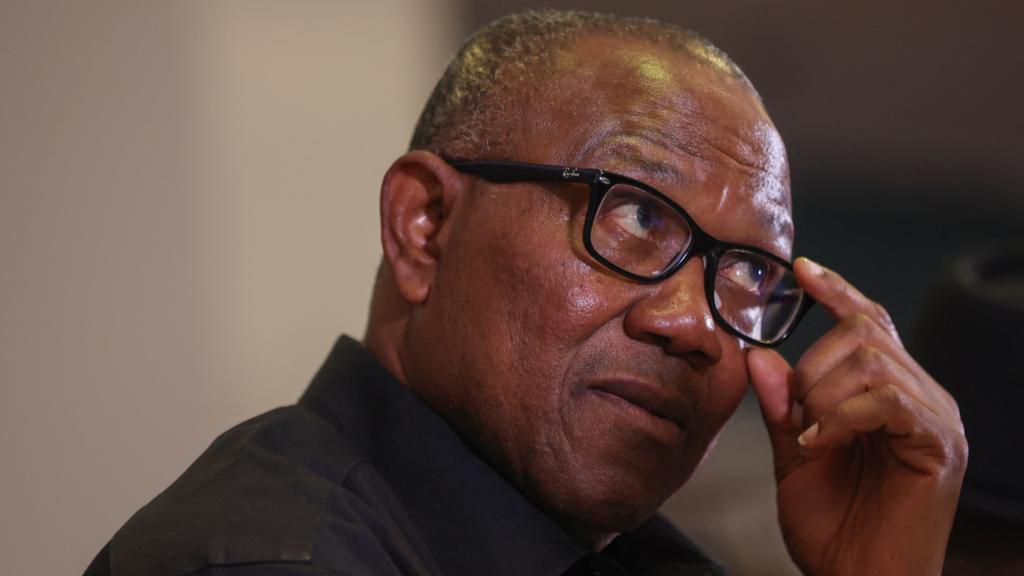
Northern Leader Questions Peter Obi's Trustworthiness Ahead of 2027 Elections A prominent Northern leader, Anthony Sani, has cast doubt on Peter Obi's electability in the North ahead of the 2027 general elections. Sani, a former Secretary-General of the Arewa Consultative Forum (ACF), suggests that President Bola Tinubu currently holds a stronger political position compared to his main rivals, Atiku Abubakar and Peter Obi.
Concerns Over Unfulfilled Promises In an interview with the Daily Post, Sani stated that the North harbors reservations about Peter Obi's ability to serve only a single term if elected. He referenced past instances of broken promises by former President Goodluck Jonathan as a basis for this distrust. "The North cannot trust Peter Obi that he will do one term. You would recall President Jonathan pledged to do one term but reneged," he stated.
Tinubu's Strong Position and Buhari's Legacy Sani emphasized the enduring loyalty of former President Muhammadu Buhari's supporters as a significant advantage for Tinubu. "Buhari's supporters would not like to betray him even in the grave. He told them he was in APC and died in APC. That loyalty remains," he explained, suggesting that this allegiance within the All Progressives Congress (APC) will likely translate into votes for Tinubu.
Opposition Coalition Unlikely to Succeed Sani downplayed the potential impact of any opposition coalition, expressing skepticism that it could significantly shift the existing political dynamics. He argued that unless President Tinubu performs poorly in office, the North would likely favor allowing him to complete the term designated for a Southerner. "Unless President Tinubu does too badly, which I hope not, the North will prefer to let him complete the tenure meant for the South. He is the only southerner with one term left," Sani stated.
Doubt Over Atiku-Obi or Atiku-Amaechi Ticket When questioned about the possibility of a strong opposition ticket featuring Atiku Abubakar paired with either Peter Obi or Rotimi Amaechi, Sani remained unconvinced. "Whether the ticket is Atiku/Obi or Atiku/Amaechi, the result will be the same. The politics do not favour the coalition," he said.
Lack of Clear Policy Alternatives Sani also criticized the opposition for failing to articulate distinct policy alternatives that would resonate with voters. He pointed out that leading candidates, including Atiku, Obi, and Tinubu, all advocated for the removal of fuel subsidies, suggesting a lack of innovative approaches to key economic issues. "Atiku, Obi, and Tinubu all campaigned for fuel subsidy removal as a non-choice. Without a new direction, the coalition does not offer a viable alternative," Sani argued.
El-Rufai and Kwankwaso's Influence While acknowledging the political strength of Senator Rabiu Kwankwaso, particularly in Kano State, Sani minimized the influence of former Governor Nasir El-Rufai. "El-Rufai is a technocrat, not a street politician. Kwankwaso, on the other hand, can deliver Kano and may defect to APC to boost his relevance," he commented.
Expert Analysis: Regional Dynamics and 2027 Political analyst Dr. Aisha Mohammed, speaking to Pulse NG, echoed Sani's sentiments regarding the importance of regional dynamics in Nigerian elections. "Historical voting patterns in Nigeria clearly demonstrate the significance of regional support. While Peter Obi enjoys considerable popularity in the South-East and among certain demographics nationwide, securing substantial support in the North remains a critical challenge for any presidential aspirant," she explained. Dr. Mohammed further added, "The perception of trust, particularly concerning adherence to term limits, is a recurring theme in Nigerian politics. Sani's remarks reflect a broader concern within the Northern political establishment regarding the potential for power imbalance and the fulfillment of agreements."
Historical Context: Presidential Term Limits and Regional Power The issue of presidential term limits and regional power-sharing has been a sensitive topic in Nigeria's political history. The unwritten agreement of rotating the presidency between the North and South is often cited to ensure equitable representation and prevent political marginalization. Past instances of perceived breaches of this understanding have led to political tensions and calls for greater inclusivity in governance. The 2027 elections are expected to be highly contested, with regional alliances and candidate credibility playing pivotal roles in determining the outcome. Sani's comments highlight the ongoing complexities and challenges facing potential contenders as they navigate Nigeria's intricate political landscape.
Originally sourced from: pulse Ng