
More than 40 killed in DR Congo attack linked to Islamic State
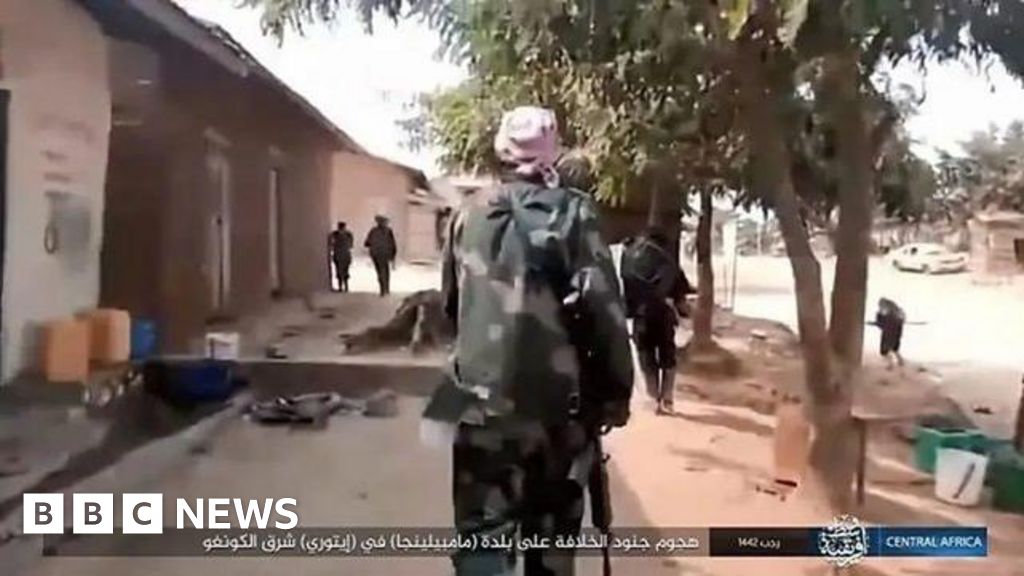
Dozens Killed in DR Congo Church Attack Blamed on Islamic State Affiliate
More than 40 people have been killed in an attack in north-eastern Democratic Republic of Congo (DR Congo), with the UN and the Congolese military attributing the assault to the Allied Democratic Forces (ADF), an affiliate of the Islamic State (IS) group. The majority of the victims were worshippers participating in a night vigil at a church in the town of Komanda, Ituri province.
The UN peacekeeping mission in DR Congo, MONUSCO, reported that nine of the deceased were children. In addition to the loss of life, shops and businesses in the vicinity were reportedly looted and set ablaze during the attack, further destabilizing the already fragile region.
ADF's Reign of Terror Continues
The ADF, originally a Ugandan rebel group, has been operating in eastern DR Congo for decades. Initially focused on opposing the Ugandan government, the group has evolved into a brutal force responsible for countless atrocities against civilians. Its alignment with Islamic State has further complicated the security landscape in the region.
The Congolese military has condemned the attack as a deliberate act of terror against civilians. "These terrorists have decided to take revenge on defenceless peaceful populations to spread terror," a military statement read. Lieutenant Jules Ngongo, the army spokesman in Ituri province, suggested the attack was a diversionary tactic intended to distract from ongoing joint military operations with Ugandan forces targeting the ADF.
International Condemnation and Calls for Vigilance
The UN has strongly condemned the attack. "These targeted attacks against defenceless civilians, particularly in places of worship, are not only appalling but also in violation of all human rights standards and international humanitarian law," stated Vivian van de Perre, deputy chief of MONUSCO. She reiterated the UN's commitment to supporting the Congolese government in its efforts to protect civilians.
The Congolese military has urged residents to remain vigilant and report any suspicious activity to security forces. The army has pledged to continue its operations to eliminate the ADF "to their last stronghold."
The ADF's Evolution and IS's Expanding Footprint
According to BBC Monitoring research, nearly 90% of Islamic State's operations are now carried out by its affiliates in Africa, highlighting the continent's growing importance to the group's global strategy. The ADF's integration into the Islamic State Central African Province (ISCAP), which also includes a group in Mozambique, demonstrates the increasing interconnectedness of extremist groups across the continent.
Dr. Anneke Van Woudenberg, Associate Director at Crisis Group, specializing in the Great Lakes region, notes that the ADF's motives are complex. "While the ADF initially had a specific political agenda related to Uganda, its goals have become increasingly diffuse over time. The alliance with Islamic State has provided the group with resources and a broader ideological framework, but the primary driver of violence remains control over territory and resources in eastern Congo."
Historical Context and Regional Instability
Ituri province, where Komanda is located, is a mineral-rich region that has been plagued by conflict for many years. The presence of numerous armed groups vying for control of resources has created a climate of instability and insecurity, making it difficult for the Congolese government to establish lasting peace. The 2021 invitation for Ugandan troops to assist in combating the ADF underscores the severity of the security situation and the limitations of the Congolese army's capacity to address the threat alone.
Professor Pierre Englebert, a scholar of African politics at Pomona College, argues that the DR Congo's challenges extend beyond the ADF. "The Congolese state suffers from deep-seated governance issues, including corruption, weak institutions, and a lack of accountability. These factors create a permissive environment for armed groups to thrive and undermine efforts to establish the rule of law."
Recent Violence and Ongoing Operations
Prior to the Komanda attack, MONUSCO had condemned a "resurgence of violence" in Ituri province, citing earlier ADF attacks on 8-9 July that resulted in 47 deaths. The ongoing joint operations between the Congolese and Ugandan militaries aim to disrupt the ADF's activities and degrade its capabilities, but the recent attack demonstrates the group's continued ability to inflict significant harm on civilian populations.
The international community continues to monitor the situation in eastern DR Congo closely, with calls for increased humanitarian assistance and a renewed focus on addressing the root causes of conflict in the region.
Originally sourced from: BBC News Africa