
Sudan militia leader convicted of war crimes during Darfur war
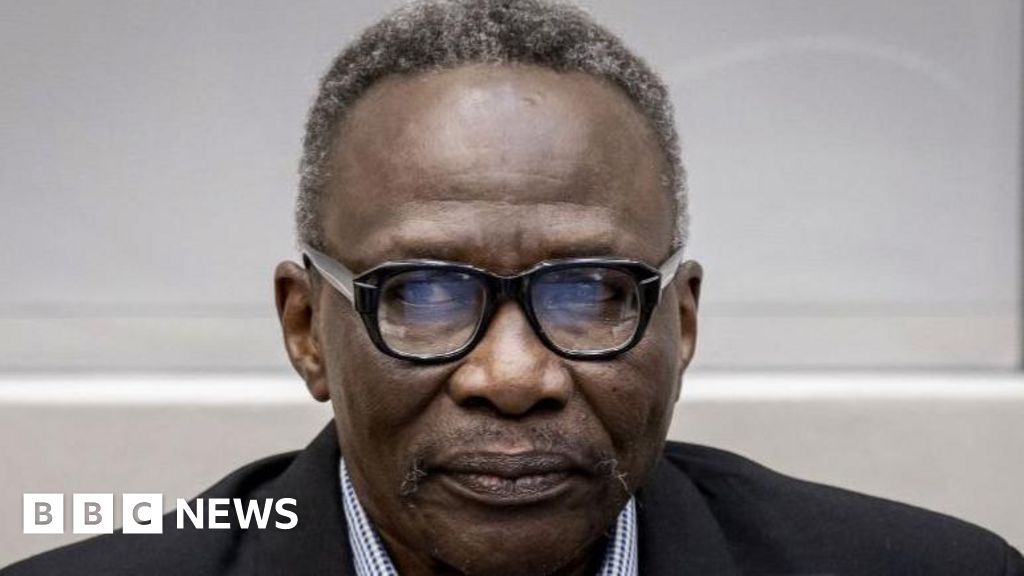
```html Sudanese Militia Leader Convicted of Darfur War Crimes by ICC
Ali Muhammad Ali Abd-Al-Rahman, also known as Ali Kushayb, a leader of the Janjaweed militia in Sudan, has been convicted of war crimes and crimes against humanity by the International Criminal Court (ICC) for atrocities committed in the Darfur region between 2003 and 2004. The verdict marks a significant milestone in the pursuit of justice for the victims of the Darfur conflict, which claimed the lives of hundreds of thousands.
Kushayb, the first individual to be tried by the ICC for the Darfur atrocities, was found guilty on 27 counts related to attacks on civilians, including murder, rape, torture, and pillaging. The charges stem from his role in orchestrating and executing attacks against non-Arab populations accused of supporting rebel groups during the initial phase of the Darfur conflict.
The Darfur Conflict: A History of Violence
The Darfur conflict erupted in 2003 when rebels from non-Arab ethnic groups took up arms against the Arab-dominated government in Khartoum, alleging marginalization and discrimination. The government responded by arming and supporting the Janjaweed militia, who unleashed a campaign of terror against civilian populations. The conflict resulted in widespread displacement, massacres, and systematic sexual violence, leading to accusations of ethnic cleansing and genocide.
The violence in Darfur has deep roots in historical tensions over land and resources, exacerbated by political marginalization and ethnic divisions. Successive governments in Khartoum have been accused of exploiting these divisions to maintain power, often at the expense of the region's diverse communities.
Witness Testimony and the ICC Verdict
During the trial, survivors recounted horrific experiences of villages being burned, men and boys being slaughtered, and women being subjected to sexual slavery. Presiding Judge Joanna Korner stated that Kushayb "encouraged and gave instructions that resulted in the killings, the rapes, and destruction committed by the Janjaweed." She added that he had given orders to "wipe out and sweep away" non-Arab tribes.
The ICC's verdict has been welcomed by human rights organizations and victims' groups as a step towards accountability for the atrocities committed in Darfur. However, many acknowledge that this is just one case and that many other perpetrators remain at large.
The Legacy of the Janjaweed and the Current Conflict
The Janjaweed militia has since morphed into the Rapid Support Forces (RSF), a paramilitary group currently engaged in a brutal civil war against the Sudanese army. The RSF has been accused of perpetrating similar atrocities against non-Arab communities in Darfur, raising concerns that the cycles of violence continue unabated.
Dr. Matthew Benson-Strohmayer, Sudan Research Director at the London School of Economics, highlights the continuity of violence in the region. "Throughout the two conflicts, there has been a 'long hiring out of militias, suppressing of rebellion, and sexual violence used as a tool of war'," he told the BBC. He expressed skepticism that the ICC verdict will have a significant impact on the current conflict, arguing that the war in Darfur is being fought with a "war of terror" strategy.
Challenges to Justice and Lasting Peace
Despite the ICC's efforts, achieving lasting peace and justice in Darfur remains a significant challenge. Many victims remain displaced, and key figures implicated in the atrocities, including former President Omar al-Bashir, remain at large or in custody in Sudan. Bashir faces an ICC arrest warrant for genocide, war crimes, and crimes against humanity, which he denies. His potential transfer to the ICC remains a politically sensitive issue.
The ongoing civil war further complicates the situation, hindering efforts to investigate and prosecute those responsible for the atrocities. The international community faces a complex challenge in supporting peace efforts, promoting accountability, and addressing the root causes of the conflict.
Kushayb will be sentenced at a later date. The verdict and subsequent sentencing will be closely watched by victims, human rights advocates, and the international community, as they represent a crucial test of the ICC's ability to deliver justice for the victims of the Darfur conflict.
More BBC stories about Sudan: Darfur city under siege: 'My son's whole body is full of shrapnel' The mother and children trapped between two conflicts Barrier being built around besieged Sudan city, satellite images show 'Our children are dying': Rare footage shows plight of civilians in besieged Sudan city
```
Originally sourced from: BBC News Africa