
Delays, distrust, dynamic prices - how 'welcoming' will World Cup be?
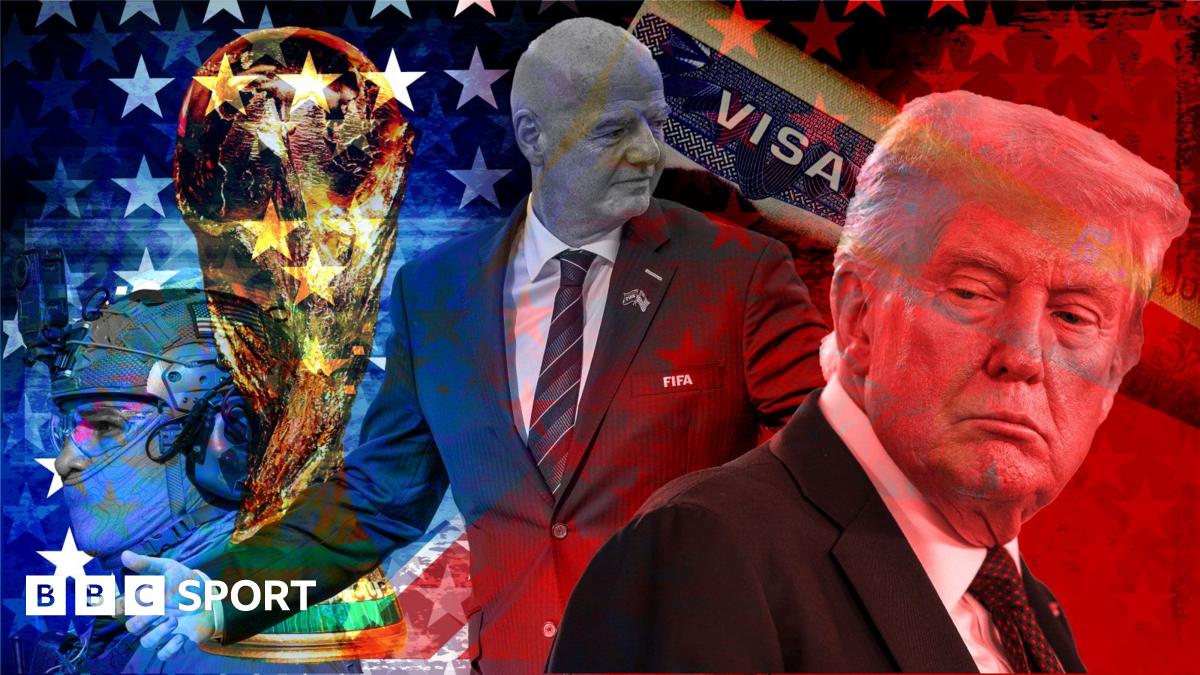
2026 World Cup: Is the USA Ready to Welcome the World? Concerns Mount Over Pricing, Visas, and Security
With the 2026 FIFA World Cup, co-hosted by the USA, Canada, and Mexico, less than two years away, questions are being raised about whether the United States will truly be able to deliver on the promise of a welcoming and accessible tournament for fans from across the globe. While FIFA President Gianni Infantino has repeatedly assured that "the world will be welcome," escalating ticket prices, stringent visa processes, and concerns about security are casting a shadow over the preparations.
Ticket Prices Spark Outrage Among Fans
The recent release of the first batch of tickets has been met with widespread criticism due to the soaring prices. While FIFA has not published a full price list, fans who participated in the ticket draw have revealed exorbitant costs. Tickets for the opening match in the USA range from $560 (£417) to $2,235 (£1,662), a significant increase compared to the 2022 World Cup in Qatar, where prices ranged from $55 (£41) to $618 (£460). The cheapest ticket for the 2026 final is priced at $2,030 (£1,510), while the most expensive reaches $6,000 (£4,462). FIFA's planned 15% charges on both buyers and sellers of tickets resold on its official platform further exacerbate the issue.
"These prices are astonishing - $2,030 for the cheapest final ticket is unacceptable," said Thomas Concannon, leader of the Football Supporters Association's England Fans' Embassy. "If fans are successful in obtaining a category four ticket from the first game to the last, that could set them back $3,180 (£2,363) at least. That is more than double what Qatar cost. Combined with travel and accommodation, this will be the most expensive World Cup for match-going fans we've ever seen by some distance."
FIFA's adoption of a 'dynamic' pricing model, which allows for prices to be raised for high-demand matches, has also drawn criticism. Scott Friedman, founder of the Ticket Talk Network in the USA, believes this system could disadvantage international fans. "Dynamic pricing has really been a thing here for more than a decade," Friedman explained. "For FIFA, it's supply and demand - they are trying to maximise their revenue. The system gives an advantage to American citizens who can maybe buy a resale ticket for a game which has less demand at much less than face value 48 hours before a match. People can't really travel from overseas to do that. The system is not fair for the rest of the world and could definitely price out people from other countries."
Visa Delays and Restrictions Add to Uncertainty
Another major concern revolves around the US visa application process. While citizens of 42 territories under the Visa Waiver Program can travel to the World Cup with a relatively simple online application, citizens of most countries, particularly those in Asia, Africa, and South America, must apply for visas. Unlike Russia and Qatar, which implemented fast-track visa processes for the World Cup, the USA has not announced any such measures.
The standard US visa application process involves at least one face-to-face interview at an embassy, and current average wait times for an initial tourist visa interview can exceed a year for some countries. The US State Department has announced plans to increase staffing levels at some embassies to expedite applications, but details remain scarce.
Travis Murphy, a former State Department diplomat and founder of Jetr Global Sports, which assists international athletes with US visas, expressed concern about the current situation. "We have a long way to go before we're ready to welcome the world," Murphy stated. "The current administration has been outspoken in terms of limiting international travel, and putting restrictions into some processes to make it more difficult. The visa process in the USA has not been very clear or efficient for decades. You also have this over-arching view that maybe people aren't welcome or are unsafe here. I don't think that's accurate, but I can see why international audiences would have that perception. I would hate to see our country put itself in a position where future events might be pulled away because of how we handle this."
Security Concerns Amidst Political Divisions
The political climate in the United States is also raising concerns about security during the World Cup. Political assassinations and mass shootings have occurred, and increased deportations and deployments of National Guard troops have led to protests and distrust in some communities. The potential for political unrest and violence raises questions about the safety of fans attending the tournament.
Daniel Byman, director of the Warfare, Irregular Threats, and Terrorism Program at the Center for Strategic and International Studies, highlighted the potential challenges. "There is no question the divisions in the United States are considerable," Byman stated. "On different issues, depending on the day, the president or some of his key people are trying to push a more polarised agenda. There is a lot of anger. With the Trump administration, there are lot of 'we don't know' answers in terms of security, because they don't yet have much of a track record for big events. There has been a pretty steady dismantling of a lot of the government agencies - cuts at the Department of Homeland Security and the FBI. With that comes not only loss of people, but loss of institutional knowledge. There are lots of individuals who can be disruptive and dangerous. And the United States, of course, has ready access to firearms in a way that most countries do not."
As the 2026 World Cup approaches, addressing these concerns regarding ticket prices, visa processes, and security will be crucial to ensuring that the tournament truly lives up to its promise of welcoming the world.
Originally sourced from: BBC Sport Football