
OHCHR Indigenous Fellowship 2026 in Switzerland (Fully Funded)
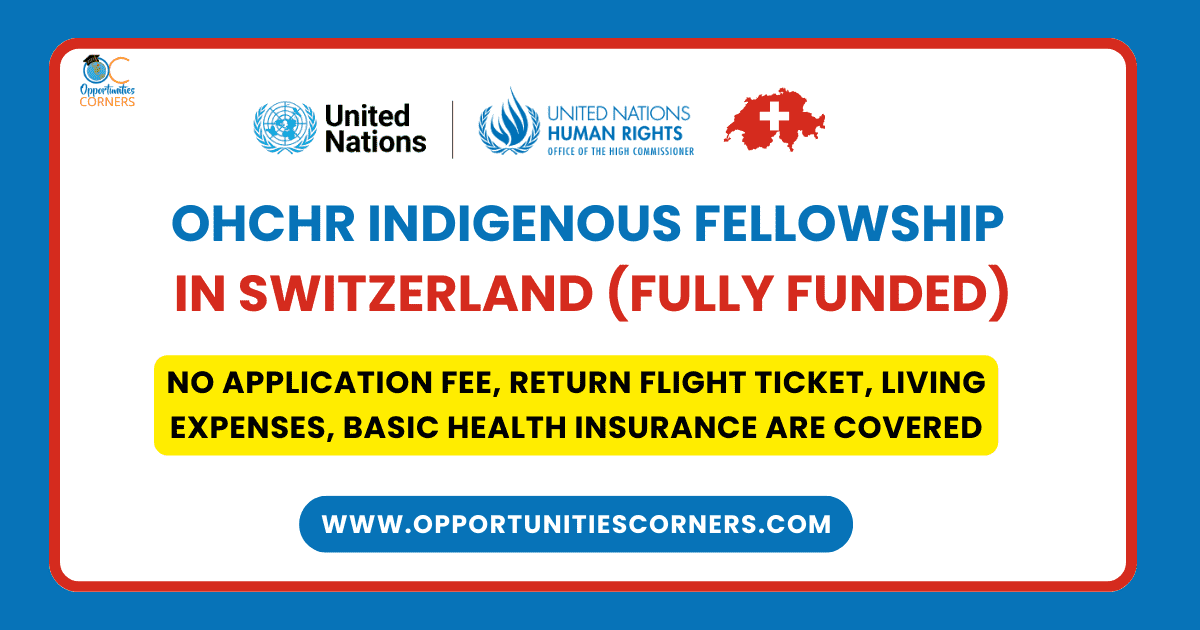
OHCHR Indigenous Fellowship Opens Applications for 2026 Program in Switzerland
The Office of the High Commissioner for Human Rights (OHCHR) is now accepting applications for its fully funded Indigenous Fellowship Program, scheduled to take place in Geneva, Switzerland, during June and July 2026. The four-week intensive program offers indigenous individuals a unique opportunity to deepen their understanding of the United Nations system and its mechanisms related to human rights, particularly concerning indigenous peoples. Launched in 1997, the fellowship aims to empower participants with the knowledge and skills necessary to effectively advocate for their communities and organizations.
Fellowship Details and Key Dates
The OHCHR Indigenous Fellowship 2026 is a fully funded program covering all essential expenses for selected participants. These benefits include:
Return airfare to Geneva, Switzerland Living expenses for the duration of the program Basic health insurance coverage
The application deadline is September 15th, 2025, giving prospective fellows ample time to prepare and submit their applications.
Program Focus and Objectives
The fellowship provides comprehensive training on the UN human rights system, focusing on instruments and mechanisms relevant to indigenous rights. Participants will gain insights into international law, advocacy strategies, and avenues for engagement with UN bodies. The program is designed to equip fellows with the tools to address human rights challenges facing their communities upon their return.
Language Accessibility
Recognizing the diverse backgrounds of indigenous communities worldwide, the training is offered in five languages: English, Spanish, French, Russian, and Portuguese, ensuring accessibility for a broad range of applicants.
Eligibility Criteria for the OHCHR Indigenous Fellowship
To be eligible for the OHCHR Indigenous Fellowship, applicants must meet the following criteria:
Be of indigenous origin. Non-indigenous individuals will not be considered. Be nominated and endorsed by their indigenous community or organization. The nominating entity should have a substantial and representative membership. Commit to training other indigenous community members upon their return, ensuring the knowledge gained is disseminated within their communities. There is no age limit for applicants.
Application Process
Interested candidates must complete the official application form, which can be downloaded from the OHCHR website. The completed application, along with supporting documents, can be submitted either in hard copy to the OHCHR office in Geneva or electronically via email. The official link to the application form and submission instructions can be found on the OHCHR website.
Expert Perspective: The Importance of Indigenous-Led Initiatives
Dr. Elena Ramirez, a leading scholar in indigenous rights and international law, emphasizes the critical role of programs like the OHCHR Indigenous Fellowship. "For decades, indigenous communities have been fighting for self-determination and the recognition of their rights on the global stage. This fellowship provides a vital platform for indigenous leaders to gain the expertise needed to navigate the complex landscape of international human rights law and advocate effectively for their communities," Dr. Ramirez explains. "The program's emphasis on training future trainers is particularly important, ensuring that the knowledge gained is shared and multiplied within indigenous communities."
Historical Context and Current Relevance
The establishment of the OHCHR Indigenous Fellowship in 1997 reflects a growing international recognition of the unique challenges and vulnerabilities faced by indigenous peoples. The program emerged from a broader movement to address historical injustices, protect indigenous cultures and languages, and ensure their full participation in political, economic, and social life. The UN Declaration on the Rights of Indigenous Peoples, adopted in 2007, further solidified the international community's commitment to upholding the rights of indigenous peoples worldwide.
Analytical Viewpoint: Addressing Systemic Inequalities
According to a recent report by the International Work Group for Indigenous Affairs (IWGIA), indigenous communities continue to face significant disparities in areas such as education, healthcare, and economic opportunity. "While international frameworks like the UN Declaration provide a crucial foundation for protecting indigenous rights, the actual implementation on the ground remains a challenge," notes Lars Anders Baer, a senior advisor at IWGIA. "Fellowship programs like the OHCHR initiative are essential for empowering indigenous leaders to advocate for policy changes and hold governments accountable for upholding their commitments."
The OHCHR Indigenous Fellowship represents a significant investment in the future of indigenous leadership and a continued commitment to promoting and protecting the rights of indigenous peoples globally. By providing training, resources, and a platform for engagement, the fellowship empowers indigenous individuals to become effective advocates for their communities and contribute to a more just and equitable world.
Originally sourced from: Opportunities Corners