
'To Kill a Monkey' is bold, bloody, and brilliant, until it trips on its own mask
'To Kill a Monkey' Impresses with Style, Stumbles on Substance: A Nollywood Thriller Review
Kemi Adetiba's latest offering, the 8-episode thriller series 'To Kill a Monkey,' initially captivates with its bold premise, striking visuals, and stellar performances. However, the series ultimately falters due to underdeveloped plot threads and character motivations, a recurring challenge in Nollywood productions. While the show's technical achievements and acting prowess are undeniable, its narrative shortcomings prevent it from reaching its full potential.
A Promising Start: Crime, Spirituality, and Style
From the opening scene, 'To Kill a Monkey' plunges viewers into a world of cybercrime, spiritual rituals, and economic desperation. The series follows Efe (William Benson), a struggling tech professional, who is drawn into a dangerous world of cybercrime after reconnecting with his wealthy and enigmatic friend, Oboz (Bucci Franklin). The introduction of a monkey mask and ritualistic elements immediately establishes a dark and intriguing atmosphere.
The cast delivers exceptional performances across the board. Bimbo Akintola shines as Inspector Mo, embodying grief, determination, and professional frustration with nuance. Bucci Franklin commands the screen as the charismatic yet menacing Oboz, while William Benson effectively portrays Efe's descent into the criminal underworld. Stella Damasus and Teniola Aladese also deliver memorable performances, contributing to the series' strong ensemble cast.
Technical Prowess: Sound, Cinematography, and Atmosphere
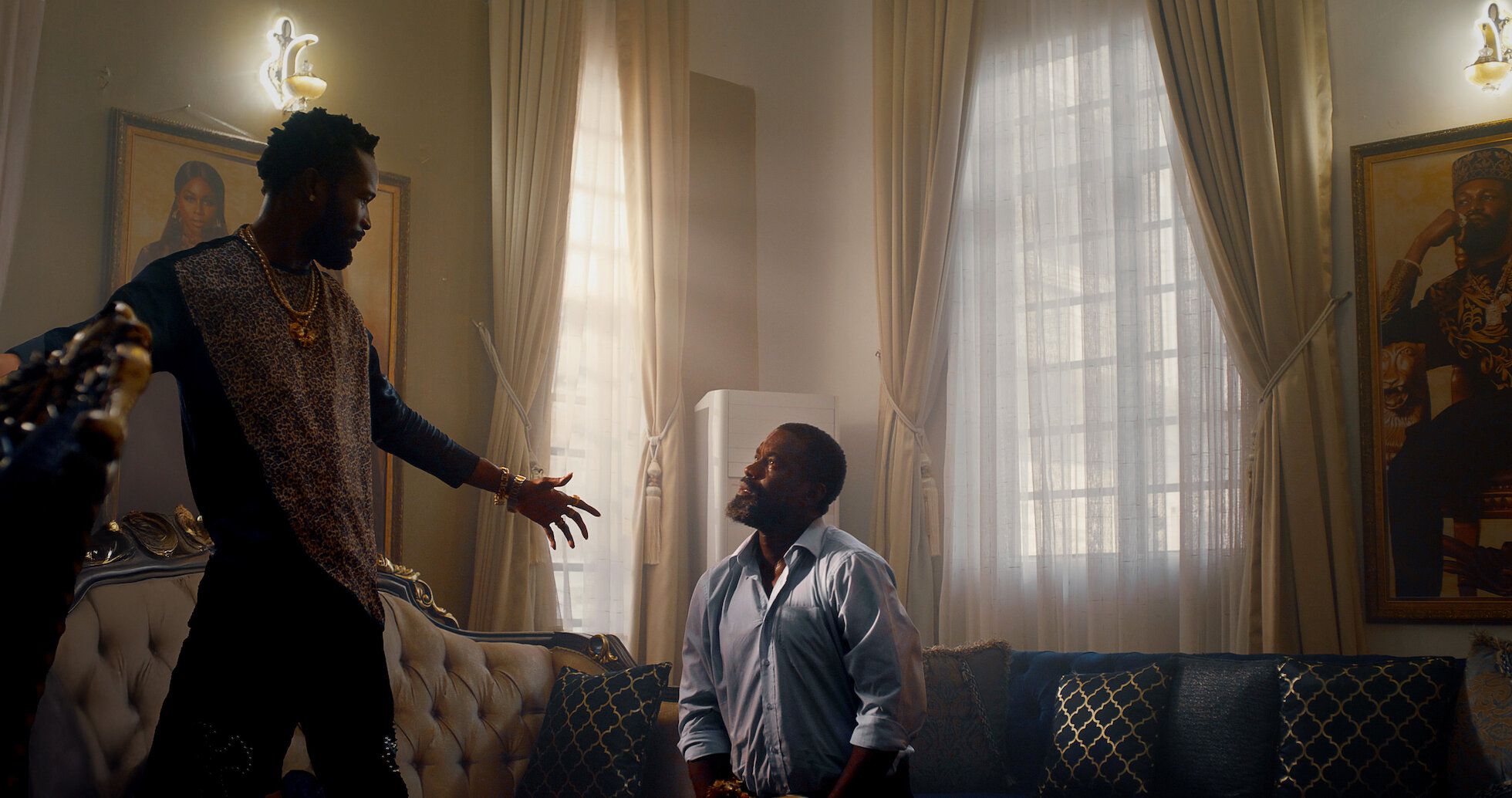
The series excels in its technical execution. The sound design, spearheaded by Oscar Heman-Ackah, Adetiba's husband, is particularly noteworthy. The score effectively amplifies the tension and suspense, creating a haunting and immersive experience. The cinematography further enhances the series' atmosphere, portraying Lagos as a character with its own secrets, shifting between gritty backstreets and gleaming high-rises. The use of lighting and shadows, particularly in the shrine scenes, creates a visually striking and spiritually charged environment.
"The visual storytelling is a standout element," says film critic Ada Okoro. "Adetiba uses the camera to convey the characters' internal struggles and the societal pressures they face. The contrast between Efe's impoverished reality and the allure of wealth is particularly effective."
Narrative Missteps: Unfulfilled Potential
Despite its strengths, 'To Kill a Monkey' suffers from several narrative weaknesses. The series introduces characters and plotlines that ultimately feel underdeveloped or unresolved. For example, the character of Sparkle, a seemingly important figure in the cybercrime ring, is introduced with much fanfare but her motivations and actions feel contrived and lack sufficient backstory. Similarly, the antagonist, Teacher, is presented as a formidable threat but his sudden demise feels anticlimactic.
According to Dr. Emeka Okafor, a professor of film studies at the University of Lagos, "One of the biggest challenges in Nollywood is the tendency to prioritize style over substance. 'To Kill a Monkey' falls into this trap to some extent. While the visuals and performances are strong, the plot could have benefited from more careful development and attention to detail."
The series also misses opportunities to explore the impact of cybercrime on everyday Nigerians. Inspector Mo's investigation seems detached from the broader societal context, focusing primarily on foreign victims. A deeper examination of how cyber scams affect local businesses, students, and public institutions would have added greater depth and relevance to the narrative. Furthermore, Efe's role in developing AI technology for the scams is largely unexplored, leaving a potentially fascinating subplot undeveloped.
A Step Forward for Nollywood?
Despite its flaws, 'To Kill a Monkey' demonstrates Nollywood's potential to create high-quality, visually compelling thrillers. The series' strong performances, technical achievements, and atmospheric storytelling are evidence of the industry's growing capabilities. However, the series also highlights the need for greater emphasis on plot development, character motivation, and thematic coherence. While it stumbles on its own mask, it points in the direction of the gritty, character-driven narratives that Nollywood is striving to create.
Performances are strong across the board. Technical aspects, especially sound and cinematography, are impressive. Plot and character development could be improved. The series showcases Nollywood's potential for creating compelling thrillers.
Ultimately, 'To Kill a Monkey' is an entertaining and visually striking series that is worth watching, but viewers should be prepared for some narrative inconsistencies. It represents a step forward for Nollywood, but also serves as a reminder of the challenges that remain.
Originally sourced from: Movie